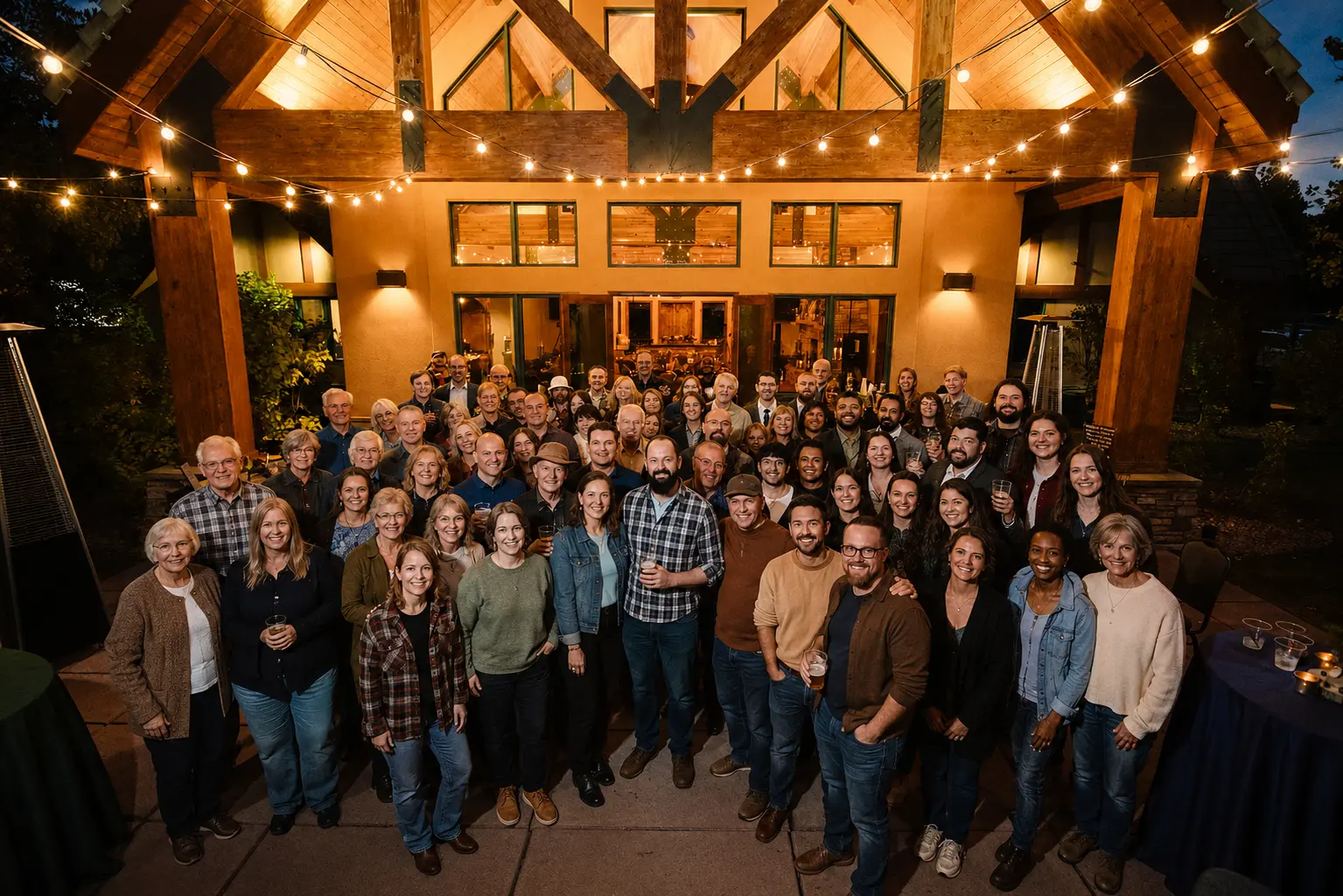
Board retreats have a reputation problem. Ask most board members about the last one they attended and you will hear some version of the same story: a full day in a conference room, a packed agenda that ran long, a few tense conversations that went nowhere, and a drive home wondering what, exactly, was accomplished. The calendar says it was a retreat. The experience felt like a very long meeting.
It does not have to be that way. A well-planned board of directors retreat is genuinely one of the most valuable things a leadership team can do together. It creates the kind of focused, uninterrupted space that normal board meeting schedules rarely allow. The right retreat strengthens relationships, clarifies strategy, resolves long-standing tensions, and sends board members home re-energized about the work. The wrong one wastes a full day and erodes confidence in organizational leadership.
The difference between the two usually comes down to three things: intent, structure, and setting. This guide covers all three, with practical guidance you can use whether you are planning your organization’s first board retreat or trying to improve on one that has felt stale.
Why Boards Hold Retreats in the First Place
Before getting into the how, it is worth being clear on the why. Board retreats serve a different purpose than regular board meetings, and conflating the two is one of the most common planning mistakes organizations make.
Regular board meetings are operational. They exist to receive reports, approve actions, review financials, and handle the business of governance. They are structured around an agenda and measured in decisions made.
Retreats are strategic and relational. They exist to step back from the operational calendar and engage in the kind of long-horizon thinking that gets crowded out by routine business. They are measured in clarity gained and relationships built.
Common reasons organizations hold board retreats include:
- Strategic planning cycles: Typically every one to three years, boards need dedicated time to assess organizational direction, review mission alignment, and set priorities for the next phase of work.
- New board composition: When a board has added several new members, a retreat accelerates the relationship-building that makes governance effective.
- Organizational inflection points: Leadership transitions, significant growth, financial stress, or program changes often warrant a dedicated retreat to align the board before moving forward.
- Governance health: Boards that have developed communication problems, unclear role boundaries with staff, or persistent meeting dysfunction sometimes need a facilitated offsite to reset dynamics.
- Annual rhythm: Many boards build a retreat into their yearly calendar simply because the discipline of stepping back together once a year produces consistently better governance.
Understanding which of these is driving your retreat shapes everything that follows, from the agenda to the facilitator choice to the venue.
Setting Clear Goals Before You Plan Anything Else
The single most important step in planning a board retreat happens before any logistics are touched: getting alignment on what success looks like.
This sounds obvious, but it is frequently skipped. The result is a retreat with a packed agenda, multiple competing priorities, and board members who leave with different impressions of what was decided or accomplished.
Effective goal-setting for a board retreat involves conversations with both board leadership and the executive director or CEO before the planning process begins. Key questions to work through include:
- What are the one or two things that, if resolved or decided at this retreat, would make it unambiguously successful?
- What conversations have we been avoiding or deferring that need dedicated time?
- Where does the board lack clarity on direction, priorities, or its own role?
- Are there relationship issues or communication patterns that need to be addressed?
- What does the executive director need from the board right now that is not happening?
The answers to these questions become the foundation of the agenda. Everything else, including the nice-to-have agenda items and the traditional updates that could be sent as pre-reads, gets evaluated against whether it serves those core goals.
A good rule of thumb is to plan for one or two substantive working sessions per retreat day, not six. Boards that try to accomplish too much in a single day accomplish very little of lasting value.
Building an Agenda That Actually Works
Once goals are clear, the agenda can be built backward from the outcomes you want. This is a different approach than most boards take, and it produces dramatically better results.
A typical one-day board retreat agenda that actually works looks something like this:
Morning: Context and Landscape
The first session of the day is not the right time to dive into contested strategy questions. People are still arriving mentally, caffeine is still taking effect, and the relational warmth that makes hard conversations productive has not been established yet.
Use the morning to level-set shared context. This might include a brief environmental scan, an honest assessment of where the organization stands against its goals, or a presentation on a trend or challenge that frames the strategic conversation to come. The goal is to make sure everyone is working from the same information before opinions start flying.
Mid-Morning: Relationship and Trust Building
Before the first substantive working session, build in something that loosens the group up and reminds board members that they are colleagues, not just fellow committee members. This does not need to be elaborate. A structured sharing exercise, a facilitated conversation about what drew each person to this board, or a brief outdoor walk can shift the energy in the room significantly.
This is especially important for boards with newer members or ones where relationships have become transactional.
Afternoon: The Hard Work
The afternoon session is where the real agenda lives. This is when you tackle the strategic or governance questions that require genuine dialogue, not just a motion and a vote. A skilled facilitator earns their fee here, keeping conversation on track, drawing out quieter voices, and preventing the two or three most dominant personalities from running the table.
Build in a break mid-afternoon. Boards that try to power through five straight hours of strategic dialogue tend to produce diminishing returns after hour three.
Close: Commitments and Next Steps
Every retreat should end with explicit clarity on what was decided, what was not decided, and what happens next. This sounds like basic meeting management, but retreats are particularly susceptible to ending in a pleasant haze of good intentions with no clear accountability.
Spend the final 30 to 45 minutes of the retreat capturing specific commitments: who is doing what, by when, and how it will be reported back to the full board. Without this, the insights from the day evaporate within two weeks.
Facilitation: When to Bring in Outside Help
One of the most consequential decisions in board retreat planning is whether to facilitate internally or bring in an outside facilitator.
Internal facilitation, typically by the board chair or executive director, works best when the group is cohesive, the agenda is genuinely collaborative rather than contentious, and the facilitator can engage as a peer without needing to manage group dynamics from the outside.
External facilitation is worth the investment when any of the following are true:
- The retreat involves evaluating executive performance or compensation.
- There are known tensions or communication problems within the board.
- The board chair or executive director has strong opinions on the topics being discussed and cannot credibly hold neutral space.
- The organization is navigating a significant change and needs the retreat to land cleanly.
- Previous retreats facilitated internally have not produced lasting results.
An outside facilitator brings neutrality, process expertise, and the ability to name dynamics that insiders often cannot. For high-stakes retreats, the cost is almost always worth it.
The Role of the Setting
Here is something that experienced retreat planners know but rarely say explicitly: the physical setting of a board retreat has a measurable effect on the quality of the conversation.
This is not mysticism. It is cognitive science. Human attention, creativity, and willingness to engage in difficult conversations are all influenced by environment. A conference room that looks identical to the one where the board holds its regular monthly meetings sends a signal, even unconsciously, that this is just another meeting. The brain does not shift into retreat mode because the agenda says it should.
An environment that is genuinely different, one that breaks from the routine, signals that this time is different. The natural world is particularly effective at this. Research consistently shows that time in natural settings reduces stress, increases creative thinking, and improves collaborative problem-solving. For a board retreat where you need people to think differently and engage more openly, a setting surrounded by trees and natural features is not a luxury. It is a strategic choice.
This is one of the reasons The Lodge at Cathedral Pines has become a preferred venue for board retreats and executive offsites in the Colorado Springs region. Nestled in the Black Forest just north of Colorado Springs, the property offers 11 acres of ponderosa pine forest, ponds, a stream, and a waterfall, providing the kind of immersive natural setting that genuinely shifts the tone of a gathering. The Main Lodge features a spacious great room with large windows looking out into the forest, a stone fireplace, and the warm, unhurried atmosphere that board retreats need to succeed.
On the practical side, the venue includes state-of-the-art audio-visual equipment, two large screens, high-speed Wi-Fi, breakout room space, an on-site kitchen, and indoor and outdoor audio systems. It accommodates up to 125 guests inside the Lodge, with an outdoor patio for breaks and informal conversation. The property is approximately 75 minutes from Denver International Airport and 30 minutes from Colorado Springs Airport, making it accessible for board members traveling from out of town without requiring an overnight stay.
You can learn more about the corporate and meeting facilities on the Lodge’s corporate events page.
Logistics Checklist for Board Retreat Planners
With goals set, agenda built, facilitation arranged, and venue selected, the remaining logistics are mostly about execution. A few items that frequently get overlooked:
- Pre-reads: Send relevant materials (financial summaries, strategic plan drafts, board self-assessment results) at least one week in advance. Board members who arrive informed allow the retreat to go deeper faster.
- Arrival logistics: Confirm directions, parking, and arrival time with all attendees. For venues in natural settings, GPS directions are not always reliable. Provide a direct phone number.
- Technology: Test AV equipment in advance. Confirm Wi-Fi reliability. Have a backup plan for presentations that depend on internet connectivity.
- Food and beverage: Board members who are hungry or caffeinated inconsistently make worse decisions. Build in a proper lunch break, keep coffee and snacks available throughout the day, and do not schedule high-stakes agenda items right before or after a meal.
- Documentation: Assign someone, not the facilitator, to capture decisions, discussion themes, and commitments throughout the day. A written summary distributed within 48 hours significantly increases follow-through.
- Phones and devices: Establish a group norm around device use at the start of the day. Boards that agree to limit device use during sessions report higher engagement and better outcomes.
What Makes a Nonprofit Board Retreat Different
Nonprofit board retreats carry a few considerations that corporate boards do not face with the same intensity.
Volunteer time is the primary one. Nonprofit board members are unpaid, which means every hour of retreat time is a genuine gift. Agendas that waste time, fail to engage people meaningfully, or do not produce tangible outcomes erode the goodwill that keeps volunteer boards functional. Nonprofit board retreat planners should be particularly ruthless about agenda focus.
The executive director relationship is another. In nonprofits, the board-ED dynamic is foundational to organizational health, and retreats often need to do relational work on that relationship explicitly, not just through task-focused programming. Creating space for honest, appreciative dialogue between board and staff leadership is worth building into the agenda.
Finally, many nonprofit boards are larger and more diverse than corporate boards, which creates facilitation complexity. Structured dialogue formats that ensure all voices are heard are more important in nonprofit retreat design than in smaller, more homogeneous executive groups.
How Often Should Boards Retreat?
The most common cadence for boards that take retreats seriously is once per year, typically timed to coincide with a strategic or budget planning cycle. Annual retreats allow boards to maintain strategic continuity, invest consistently in board culture, and address emerging issues before they become crises.
Some organizations hold a shorter, half-day retreat at the start of each board year to orient new members and set the tone for the coming cycle, in addition to a longer annual strategic retreat. This two-retreat model works particularly well for boards with significant turnover.
What does not work is treating retreats as irregular events pulled together in response to a crisis. Boards that only retreat when something has gone wrong are already behind. The value of a board retreat is highest when the organization is healthy and the work is about getting better, not about fixing what broke.
Schedule Your Retreat at The Lodge at Cathedral Pines
If you are planning a board of directors retreat in the Colorado Springs region and looking for a venue that combines professional amenities with an environment genuinely conducive to the kind of thinking a board retreat requires, The Lodge at Cathedral Pines is worth a visit.
The setting does the work that no conference room can. The trees, the quiet, the fireplace, the views through the windows, all of it signals to your board members that this day is different from a regular meeting. That signal matters more than most planners realize.
To schedule a tour or inquire about availability and pricing for corporate and board events, contact the team directly:
The Lodge at Cathedral Pines
13977 Milam Rd, Colorado Springs, CO 80908
719.301.9022
Contact Us
Board retreat dates may fill quickly, particularly in spring and fall when organizations align retreats with strategic planning cycles. If you have a date in mind, reaching out early gives you the best selection of available windows.