The question of “How long is a wedding?” is one of the most fundamental, yet complex, inquiries for any newly engaged couple. It is a question that extends far beyond the duration of the ceremony itself, encompassing everything from the first application of makeup to the final grand exit.
For couples planning their celebration in the breathtaking landscape of Colorado Springs, particularly in the serene, high-altitude environment of the Black Forest, the answer is further nuanced by unique logistical and environmental considerations.
This post is designed to provide a phase-by-phase deconstruction of the modern wedding day timeline. We will move past the simple answer—which typically places the main event (ceremony and reception) at five to six hours—to explore the full scope of the day, which often spans 10 to 12 hours from the moment the first vendor arrives to the final guest departure. Furthermore, we will integrate essential, localized advice for a Colorado Springs wedding, ensuring that your timeline is not only efficient but also optimized for the mountain setting and the unparalleled beauty and flexibility of venues like The Lodge at Cathedral Pines.
The Full Scope of the Wedding Day: A Phase-by-Phase Analysis
To accurately determine the length of a wedding, one must consider three distinct, yet interconnected, phases: The Preparation Phase, The Ceremony and Transition Phase, and The Reception Phase. Each phase requires careful scheduling, buffer time, and a deep understanding of vendor logistics to ensure a seamless and stress-free experience.
Phase 1: The Preparation Phase (4 to 6 Hours)
While guests may not arrive until the late afternoon, the wedding day officially begins with the preparation phase. This period is dedicated to personal styling, photography, and the crucial final moments of anticipation. A well-structured preparation timeline is the foundation for the entire day’s success, preventing delays that cascade into the evening.
1. Hair and Makeup Logistics (3 to 5 Hours)
The duration of hair and makeup is heavily dependent on the size of the wedding party and the number of artists hired. A typical schedule allocates approximately 45 to 60 minutes per person for hair and a similar amount for makeup. The bride’s time slot is usually longer, often requiring 90 to 120 minutes for a full, detailed look. The most common mistake is scheduling the final person too close to the dressing time. A critical buffer of at least one hour must be maintained between the completion of the last hair and makeup session and the time the bride needs to be dressed.
| Wedding Party Size (Excluding Bride) | Estimated Total Time (With 2 Artists) | Key Scheduling Consideration |
|---|---|---|
| Bride Only | 1.5 – 2 hours | Must be completed 1 hour before dressing. |
| 3 Attendants | 3 – 4 hours | Staggered start times are essential, beginning with the earliest wake-up call. |
| 6+ Attendants | 4 – 5 hours | Requires a minimum of three artists to maintain schedule and prevent burnout. |
Venue Advantage: The Importance of Dedicated Suites
The efficiency of this phase is significantly enhanced by having dedicated, comfortable, and well-lit spaces. A wedding venue that offers separate, private Bride and Groom Suites, such as we have here at The Lodge at Cathedral Pines, provide a serene sanctuary for this process. These spaces prevent logistical overlap, offer ample room for the entire wedding party and vendor teams, and ensure that the couple remains relaxed and separated until the designated moment. Furthermore, having the preparation on-site eliminates the need for travel time, which can be unpredictable in the Colorado Springs area, especially with potential traffic or mountain road conditions.
2. Vendor Arrival and Setup (3 to 4 Hours Overlap)
While the wedding party is preparing, the venue transforms. The timeline must accommodate the arrival and setup of major vendors, which often overlaps with the final hours of preparation.
- Florist: Typically arrives 3-4 hours before the ceremony to set up the arch, aisle décor, and deliver personal flowers.
- Caterer: Requires 3-4 hours for kitchen setup, table setting, and final food preparation.
- Photographer/Videographer: Arrives 1-2 hours before the final hair and makeup session to capture detail shots (dress, rings, invitations) and candid moments of preparation.
3. Getting Dressed and Pre-Ceremony Photography (1.5 to 2 Hours)
This is the final, most photogenic segment of the preparation phase. The photographer’s timeline is paramount here.
- Detail Shots (30 minutes): The photographer captures the dress, shoes, jewelry, and invitations before the bride is in the gown. This is a quiet, artistic time.
- Dressing (30-45 minutes): The process of putting on the gown, which often takes longer than anticipated due to intricate lacing, buttons, or layers. The mother of the bride or maid of honor should be fully dressed and ready to assist.
- First Look and Portraits (45 to 90 minutes): Whether the couple opts for a “First Look” or separate portraits, this time is blocked out for the most important posed photos. The “First Look” is the most time-efficient option, allowing the couple to complete all wedding party and family portraits in a single, continuous session (60 to 90 minutes) before the ceremony. This allows the couple to fully enjoy the cocktail hour later.
Part II: The Ceremony and Transition Phase (1.5 to 2 Hours)
This phase is the core of the day, followed by the essential transition period that bridges the ceremony and the reception. Precision in this phase is key to maintaining the day’s momentum.
1. The Ceremony (15 to 60 Minutes)
The length of the ceremony is dictated primarily by its style and religious requirements.
| Ceremony Type | Estimated Duration | Notes on Timing |
|---|---|---|
| Civil/Non-Religious | 15 – 25 minutes | Focuses on vows, ring exchange, and pronouncement. Ideal for couples prioritizing reception time. |
| Personalized/Outdoor | 25 – 40 minutes | Includes readings, a unity ceremony (e.g., sand or wine), and personal anecdotes. This is common in the Black Forest setting. |
| Traditional Religious | 45 – 60+ minutes | Follows established rites and rituals, often including hymns, specific prayers, and communion. |
The Colorado Springs Altitude Factor
For an outdoor ceremony in Colorado Springs, particularly at an elevation like the Black Forest, a shorter ceremony is often advisable. Some guests traveling from sea level may experience mild effects of the altitude, and standing for an extended period in the sun or cold can be taxing. A concise, meaningful ceremony ensures guest comfort and allows for a quicker transition to the cocktail hour where hydration can be prioritized. Furthermore, the intense Colorado sun, even at altitude, can be harsh on guests and the wedding party. A shorter ceremony minimizes exposure during peak sun hours.
2. The Transition: Cocktail Hour and Golden Hour Photos (60 to 90 Minutes)
The cocktail hour serves a dual purpose: entertaining guests and providing the final window for essential photography.
- Guest Entertainment (60 minutes): Guests enjoy appetizers and drinks. This is a crucial time for the couple to finalize any remaining family or full-group portraits if a First Look was not performed.
- The Golden Hour Anchor: This is the most critical time-block. In Colorado, the light quality changes dramatically, and the “Golden Hour”—the period of soft, warm light just before sunset—is essential for capturing the stunning mountain scenery. A professional photographer will advise that this session should begin approximately 30 to 45 minutes before the official sunset time. This local factor must be the anchor for the entire day’s timeline. If the couple skips the First Look, the cocktail hour must be extended to 90 minutes to accommodate both the couple’s portraits and the remaining family photos.
The Reception Phase (4 to 5 Hours)
The reception is the longest continuous segment of the wedding day, typically lasting four to five hours. This is the celebratory culmination of the day’s events.
| Reception Event | Estimated Duration | Notes on Timing and Flow |
|---|---|---|
| Grand Entrance | 5 – 10 minutes | Quick, high-energy start to transition from cocktail hour. |
| Dinner Service | 60 – 90 minutes | Depends on service style (plated vs. buffet). Plated service is generally slower. |
| Toasts and Speeches | 15 – 25 minutes | Should be limited to 3-4 speakers to maintain momentum. |
| First Dance & Parent Dances | 10 – 15 minutes | Often immediately follows toasts to transition to the dance floor. |
| Open Dance Floor | 2 – 3 hours | The main block of time for celebration. |
| Cake Cutting/Dessert | 10 minutes | A brief pause in dancing, often done mid-way through the dance block. |
| Final Exit | 5 – 10 minutes | The formal end of the event (e.g., sparkler exit, send-off). |
Total Main Event Time (Ceremony + Transition + Reception):
- Minimum: 15 minutes (Ceremony) + 60 minutes (Cocktail) + 4 hours (Reception) = 5 hours and 15 minutes
- Maximum: 60 minutes (Ceremony) + 90 minutes (Cocktail) + 5 hours (Reception) = 6 hours and 30 minutes
The average, therefore, remains firmly in the 5 to 6-hour range for the core event.
The Colorado Springs Context: Logistical Planning at Altitude and Seasonal Adjustments
Planning a wedding in the Colorado Springs area, particularly in the Black Forest, introduces specific logistical elements that must be factored into the timeline to ensure the comfort and safety of all guests.
1. Altitude Acclimation and Guest Comfort
Colorado Springs sits at an elevation of approximately 6,035 feet, and venues in the Black Forest can be slightly higher. For guests traveling from sea level, this requires proactive planning:
- Pre-Arrival: Encourage guests to arrive in Colorado 24 to 48 hours before the wedding day to begin acclimating. This is crucial for mitigating the effects of altitude sickness.
- Hydration: The dry, high-altitude air necessitates constant hydration. The timeline must account for easy access to water and non-alcoholic beverages throughout the day, especially during the outdoor ceremony and cocktail hour.
- Alcohol Consumption: Alcohol has a more pronounced effect at altitude. The reception timeline should reflect this, perhaps starting with a lighter cocktail selection and ensuring food is served promptly after the cocktail hour.
2. Seasonal Timeline Adjustments
The season of your Colorado Springs wedding will significantly impact the timeline, primarily due to temperature and daylight hours.
- Summer (June – August): The sun sets later, pushing the Golden Hour back to 7:30 PM or later. This allows for a later ceremony (e.g., 5:30 PM or 6:00 PM), but requires careful planning to avoid the intense heat of the mid-afternoon. An indoor ceremony or a shaded outdoor site is typically between 1:00 PM and 4:00 PM.
- Fall (September – October): The most popular season, with the Golden Hour shifting earlier (e.g., 6:00 PM to 7:00 PM). The ceremony must be moved up accordingly (e.g., 4:00 PM or 4:30 PM) to ensure the couple’s portraits are captured in the best light. The cooler temperatures make the outdoor ceremony more comfortable.
- Winter (November – February): The sun sets as early as 4:30 PM. This necessitates a very early timeline. A 2:00 PM or 3:00 PM ceremony is required to capture any natural light for portraits. The reception will begin much earlier, and the timeline must be built around the need for a fully indoor event, highlighting the value of a spacious, climate-controlled venue.
3. Vendor Coordination and Travel Time
The Colorado Springs area is geographically expansive. When working with vendors—especially those traveling from Denver or other parts of the Front Range—the timeline must include a generous buffer for travel.
- Black Forest Logistics: The secluded, natural setting of the Black Forest, while beautiful, means travel times for vendors and shuttles can be slightly longer than in an urban setting. A 30-minute buffer for all major vendor arrivals is a professional necessity. This is especially true in winter, where snow and ice can significantly delay travel.
- Load-Out: The timeline doesn’t end with the Grand Exit. Most venues require vendors to be fully loaded out within one hour of the event’s conclusion. This final hour of the day must be communicated clearly to the catering and décor teams.
The Lodge at Cathedral Pines Advantage: Flexibility and Seamless Flow
A venue’s structure and policies can significantly impact the feasibility and flow of a meticulously planned timeline. We are uniquely positioned to support a seamless, extended wedding day through its design and operational flexibility.
1. Indoor/Outdoor Versatility for Weather and Flow
Colorado weather is famously unpredictable, particularly in the mountains. A key factor in maintaining a strict timeline is the ability to pivot without significant disruption.
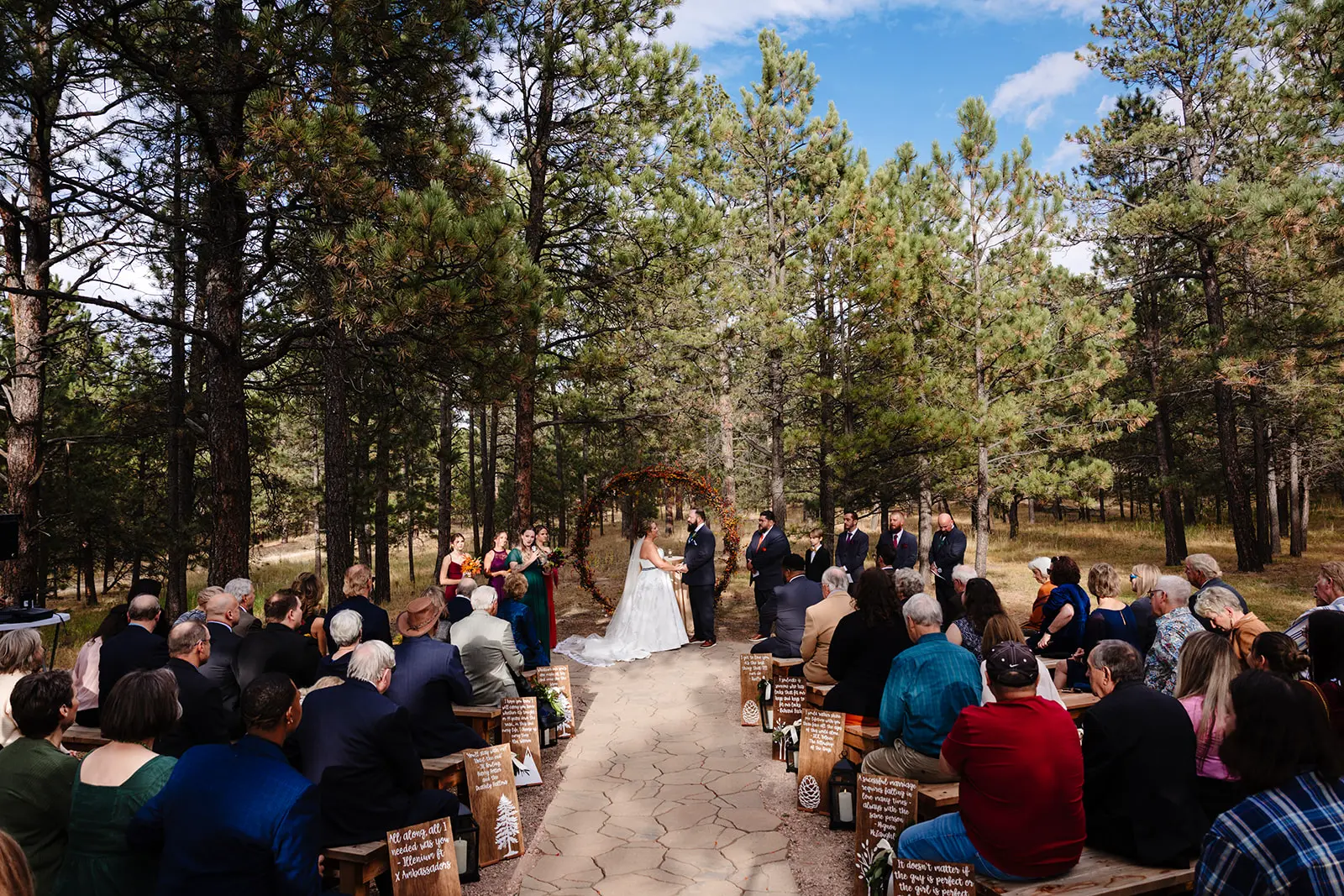
- Outdoor Ceremony Site: The picturesque outdoor ceremony site, nestled among the towering pines, is the ideal setting for a 30-minute personalized ceremony.
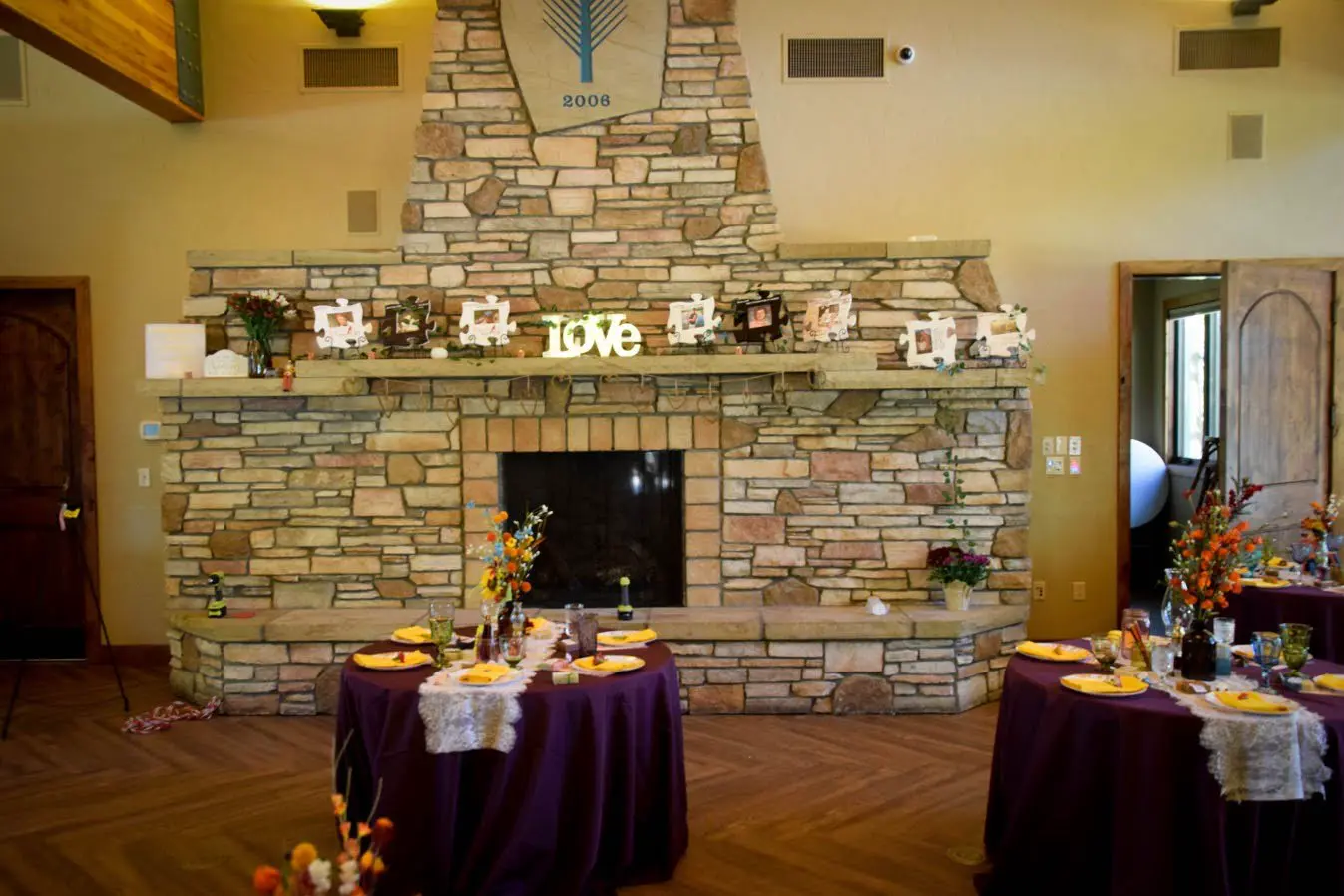
- Seamless Indoor Transition: Should the weather require a sudden change, the spacious, climate-controlled Lodge interior provides a beautiful, immediate backup. This indoor/outdoor flexibility eliminates the need for a lengthy, stressful transition or a complete timeline overhaul, which can often add an hour or more to the schedule at less versatile venues. The ability to host the ceremony and reception in close proximity ensures guests are never waiting long for the next event to begin.
2. The Sanctuary of Private Suites
As established in the preparation phase, the quality of the getting-ready space directly influences the day’s start. Our provision of private, well-appointed Bride and Groom Suites is a direct investment in timeline efficiency and emotional well-being.
- Stress Reduction: Separate, luxurious spaces allow both partners and their respective parties to prepare simultaneously without interruption. This prevents the common issue of one party running late and delaying the First Look or the ceremony start.
- Photographic Opportunity: These suites are designed with natural light and aesthetic appeal, providing a beautiful backdrop for the pre-ceremony photography, eliminating the need for the photographer to travel to an off-site hotel and saving valuable time.
3. Vendor Flexibility: Control Over Your Timeline
The Lodge at Cathedral Pines offers couples the strategic choice between a streamlined, all-inclusive wedding package or the freedom to curate their own day using outside vendors. This flexibility directly impacts the timeline management:
- All-Inclusive Option: For couples prioritizing simplicity and time-saving, the all-inclusive package means vendor coordination is handled internally, drastically reducing the planning time and the risk of day-of logistical errors. The team manages the complex vendor timeline, allowing the couple to focus solely on the experience.
- Outside Vendor Option: For couples with a specific vision, the freedom to bring in their own vendors (caterers, planners, DJs) allows for a highly customized timeline. While this requires more coordination, our experience with local teams ensures a smooth process, provided the couple secures the necessary one-day insurance policy. This policy of flexibility empowers the couple to design a day that is precisely the length they desire, without being constrained by a limited vendor list.
A Master Timeline for the Colorado Springs Wedding Day
To synthesize the information above, the following table presents a comprehensive, 12-hour master timeline for a typical Saturday wedding in the Black Forest, designed to capture the Golden Hour and ensure a relaxed pace.
| Reception Event | Estimated Duration | Notes on Timing and Flow |
|---|---|---|
| Grand Entrance | 5 – 10 minutes | Quick, high-energy start to transition from cocktail hour. |
| Dinner Service | 60 – 90 minutes | Depends on service style (plated vs. buffet). Plated service is generally slower. |
| Toasts and Speeches | 15 – 25 minutes | Should be limited to 3-4 speakers to maintain momentum. |
| First Dance & Parent Dances | 10 – 15 minutes | Often immediately follows toasts to transition to the dance floor. |
| Open Dance Floor | 2 – 3 hours | The main block of time for celebration. |
| Cake Cutting/Dessert | 10 minutes | A brief pause in dancing, often done mid-way through the dance block. |
| Final Exit | 5 – 10 minutes | The formal end of the event (e.g., sparkler exit, send-off). |
Conclusion: The Perfect Length is Your Length
Ultimately, the answer to “How long is a wedding?” is a reflection of the couple’s priorities. While the core event typically spans five to six hours, the full experience is a meticulously choreographed, 12-to-14-hour day. For those planning a wedding in Colorado Springs, this timeline must be adjusted to account for the stunning, yet demanding, high-altitude environment and the seasonal shifts in daylight.
By choosing a venue that understands these complexities—a venue that offers the indoor/outdoor versatility to manage unpredictable mountain weather, provides the private suites necessary for efficient preparation, and grants the vendor flexibility to tailor the day precisely to your needs—you ensure that your wedding day flows not just efficiently, but flawlessly.
The Lodge at Cathedral Pines is designed to be the backdrop for a timeline that is as relaxed as it is memorable.
We invite you to schedule a tour to see how our unique Black Forest setting can accommodate your perfect wedding day, no matter the length.